
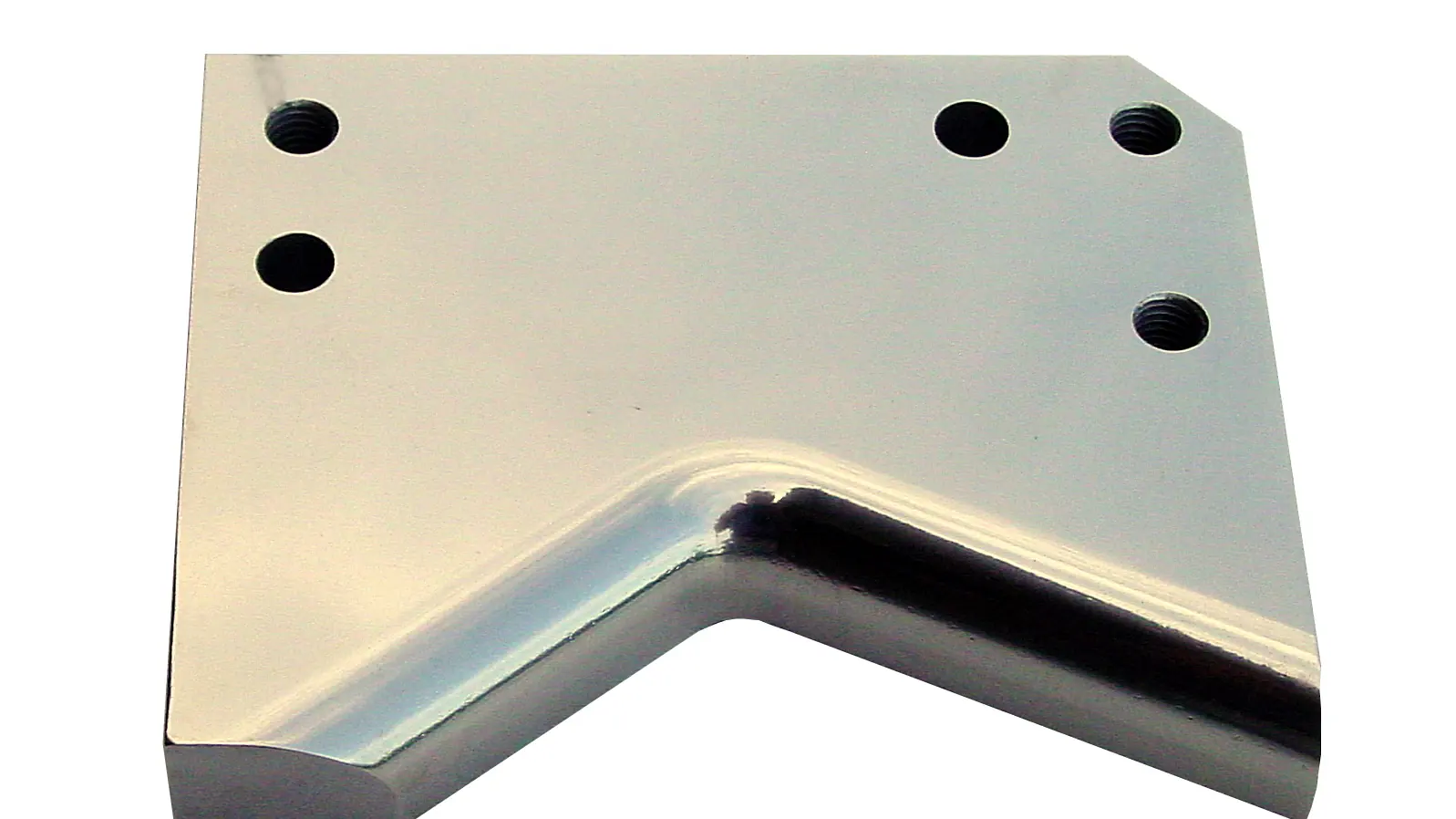
CrN — heavy-duty toughness & a hard-chrome replacement.
CrN is thicker, more ductile, and more corrosion-resistant than most PVD films — the coating we use on stamping dies, forming tools, and applications that used to run hard chrome.
What CrN is, in numbers.
Approximate properties — final spec is confirmed for every job during quote.
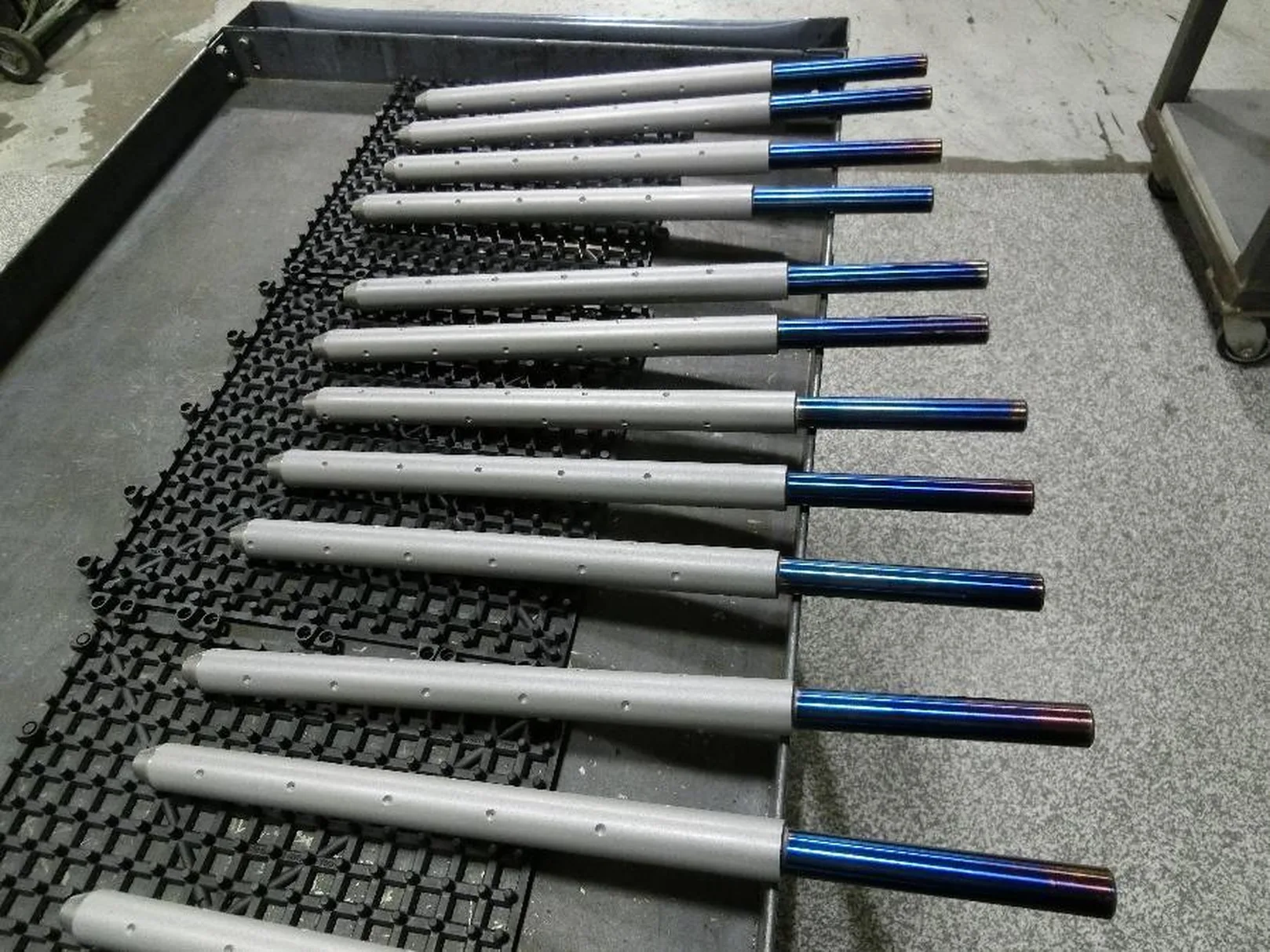
CrN-coated shafts. Tough, low-friction, and a proven hard-chrome replacement on wear parts and forming tools.
Ductile, corrosion-resistant, and thicker than most PVD films.
Chrome Nitride is a slightly softer PVD ceramic than TiN or TiCN — but that lower hardness comes with much better toughness. CrN doesn't crack under impact the way harder films can, and its natural corrosion resistance and low friction make it the go-to coating for stamping and forming dies.
How long a die runs between polishings depends on the material being formed, but the gain is large: customers who previously polished every 300–500 hits have reported runs of 25,000+ hits on CrN — a step-change in tool life and machine uptime.
CrN is also the first of the hard chrome plating alternatives we recommend. Environmental regulations have made hard chrome plating expensive or impossible in many shops; as a hexavalent chrome replacement, CrN gives you the wear and corrosion behavior you were getting from hard chrome, without the hex-chrome process.
Where CrN pays off
- Stamping diesFar more hits between polishing cycles — how many depends on the material being formed.
- Forming toolsDuctile film handles impact and flex without cracking.
- Hard-chrome replacementSame wear and corrosion behavior, no hex-chrome process.
This is galling.
Metal pickup, friction, and scratching on an uncoated forming die — the cause of constant die polishing, scored parts, and stopped press runs.
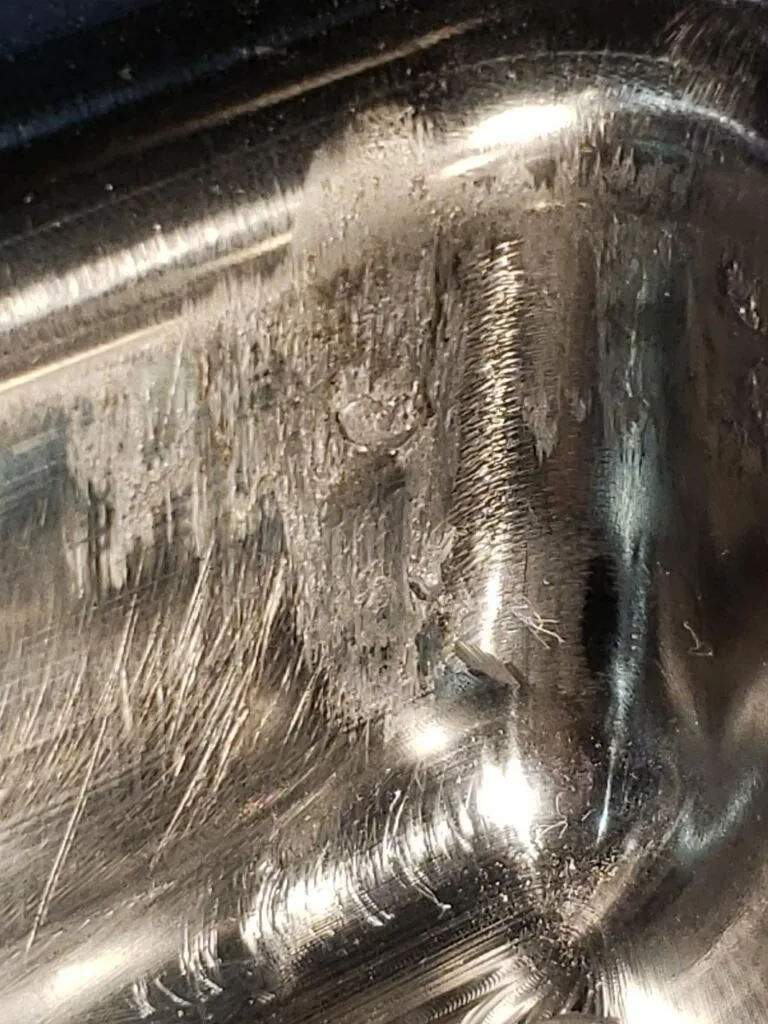
Galling on an uncoated die surface: workpiece material cold-welds to the tool, then drags and scores every part that follows.
Galling starts when the workpiece and the tool are chemically similar enough to cold-weld under forming pressure — most often stainless, aluminum, and galvanized stock against a steel die. Once a speck of workpiece material sticks to the tool, it ploughs the next part, picks up more metal, and the die degrades quickly from there.
CrN breaks that cycle. It is chemically dissimilar to the workpiece, so the metal has nothing to weld to, and its low friction keeps material sliding instead of grabbing. That is why it is our standard answer on stamping and forming tools that gall.
Compare CrN with the rest of our lineup.
Ready to CrN-coat your dies?
Send us the die material, the process, and how often you're polishing today. We respond within one business day.