
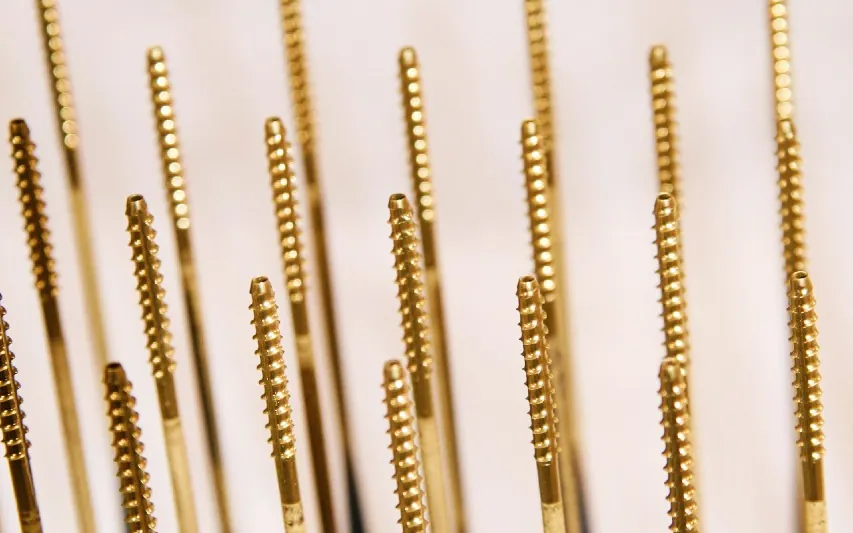
Heat treating for parts that will be PVD coated.
Typical PVD coating temperatures are about 800°F. That temperature can affect the hardness of your parts and may cause parts to shrink or grow. This page covers how to prep your tool steel so the coating cycle doesn't take you out of spec.
Temper at 900–950°F before you send parts out.
To minimize the effect our coating temperature might have on your parts, we suggest tempering them at 900–950°F before sending them out for coating.
Many of our customers specify a hardness on their prints, which results in the heat treater tempering at the lowest temperature possible to achieve the specified hardness. This results in many common tool steels being tempered at 450°F, or below. When we coat those parts at 800°F, there is a higher probability of part distortion than if the part had been tempered at 900°F.
The amount of possible distortion depends on the size of your part and the tolerances on the part. For some applications it might not be a big concern — but for high-tolerance parts, it's something that needs to be considered. Consult your heat treater for more info.
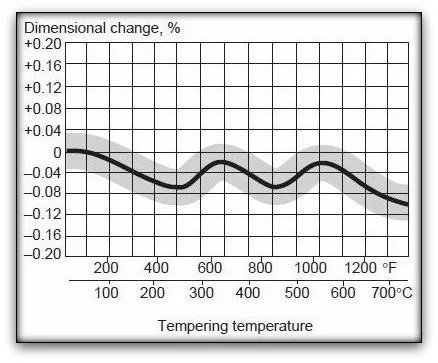
Size change vs. tempering temperature
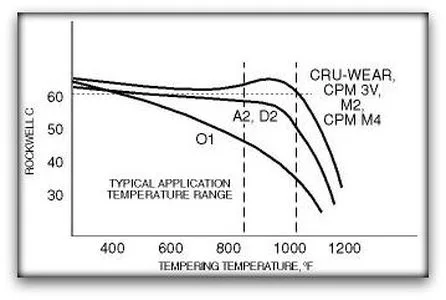
Hardness vs. tempering temperature
Most common tool steels can be tempered at 900°F+ and still stay above 55 Rc.
From the hardness chart, it's apparent that many common tool steels can be tempered at 900°F, or above, and still yield a hardness above 55 Rc. That gives you enough hardness for the tool to perform, and enough temper margin that the 800°F PVD cycle won't draw the material back.
It's also apparent why we do not recommend using O-1 if you're going to coat it later — its hardness drops rapidly with tempering above roughly 400°F, so there isn't a working window that keeps the tool hard and stable through the coating cycle.
The three rules that keep parts in spec through PVD.
Temper at 900–950°F
Aim for a tempering temperature above our 800°F coating temperature so the PVD cycle won't further draw back the substrate.
Hold hardness above 55 Rc
Most common tool steels can hit both — 900°F+ tempering and still above 55 Rc — which is where you want to be for a coated tool.
Skip O-1 if you'll coat
O-1 doesn't hold hardness above ~400°F tempering, so there's no working window that keeps it hard and dimensionally stable through a PVD cycle.
Not sure if your parts are ready for coating?
Send us the part, material, heat-treat spec, and tolerances. We'll tell you whether you're set up for a successful coating cycle — before you ship. Response within one business day.